
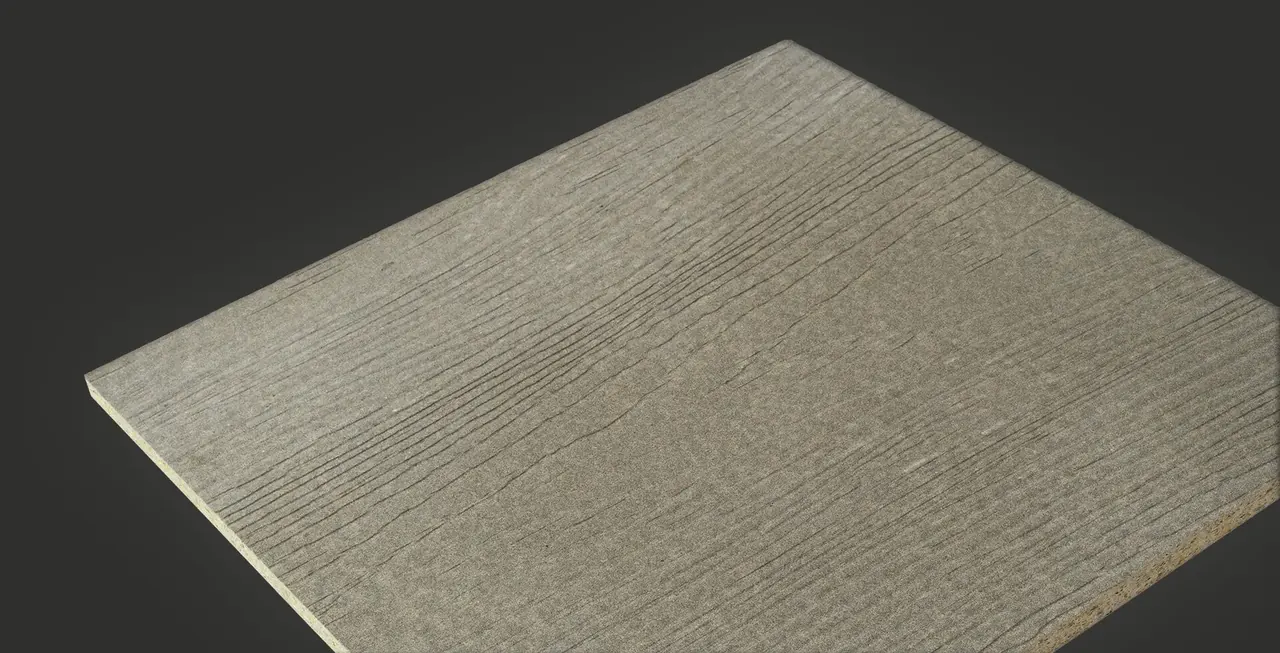
Untreated cement-bonded particle board

CETRIS PROFIL

Embossed wood- or slate-textured board for facades and walls that show their surface, no finish required.

A2A2-s1,d0 · EN 13501-1

CETRIS PROFIL — cement-bonded particle board.

Description

CETRIS PROFIL is the base board with an embossed relief surface — a wood or slate texture — for exposed facade and wall surfaces without a finish. Available in 10 and 12 mm.

Technical data

Technical data
Reaction-to-fire classA2-s1,d0 per EN 13501-1
Product standardEN 13986:2004+A1:2015
Density1150–1500 kg/m³
Airborne sound insulation30–35 dB
Surfacenatural-grey cement relief surface, patterned to imitate wood or slate

This summary is based on the manufacturer’s documentation. For specification and purchasing, always check the latest original document. See the sources below.

Services

  • Cutting to size — panels down to 50 × 50 mm
  • Hole drilling and countersinking
  • Edge milling — chamfer, half-lap, tongue and groove
  • Surface sanding (flooring boards)
  • Surface finishing to order — primer, colour or glaze
  • Delivery on pallets across Sweden

Weight & pallet

Weight and pallet
ThicknessFormatWeight/m²Weight/boardBoards/palletEdge
10 mm1250×3350———straight
12 mm1250×3350———straight

Pallet data awaits confirmation from the manufacturer and may be adjusted.

Documents

TDS EN

Technical data sheet

Inline PDF viewing is not available in this browser.

Open separately

Open the document in your browser PDF viewer for the best mobile experience.

Open separatelyDownload PDF
View document library

Suitable for systems

Properties

Cement-bonded particle board combines the durability of cement with the lower weight and workability of wood.

Composition (weight percentage)

  • 69%Cement (binder)
  • 19%Wood chips
  • 10%Water
  • 2%Hydration additives

FAQ

Frequently asked questions about CETRIS PROFIL

Clear answers to the questions buyers and specifiers most often ask before selecting and ordering.

What is CETRIS PROFIL used for?

CETRIS PROFIL is used for walls, ventilated facades, fire protection and ceilings & plinths, among other applications. These are uses where the manufacturer’s documentation and our range support the board. Thickness, supporting frame, fixings and joints still depend on the specific assembly, so check the structural design and system solution before specifying the board in a project.

What reaction-to-fire class does CETRIS PROFIL have?

CETRIS PROFIL is classified A2-s1,d0 under EN 13501-1 for reaction to fire. The class describes how the board as a material contributes to a fire in a standardised test. It is not the fire resistance (EI or REI) of a wall, floor or encasement, which always applies to the complete tested assembly of boards, framing, insulation and fixings.

Which thicknesses and formats are available?

This page lists 10–12 mm in 1,250 × 3,350 mm. Boards can also be cut to size. State the thickness, net dimensions and quantity in your quote request, and we will confirm availability, pallet configuration, weight and lead time before you order. The figures in the quotation always apply.

Does CETRIS PROFIL withstand moisture and frost?

Yes. CETRIS boards are moisture- and frost-resistant and have been tested over 100 freeze–thaw cycles to EN 1328. Service life still depends on the workmanship: correct joint width, edge distances, ventilation and corrosion-protected fixings. On an untreated surface, free lime may at first leave a whitish film. This is normal and fades over time.

How is CETRIS PROFIL machined and fixed?

CETRIS PROFIL is cut with carbide or diamond blades and drilled with HSS bits. Use extraction and respiratory protection against fine cement dust. Fix the board to timber or sheet metal with corrosion-protected screws or rivets. Pre-drilling, screw type and edge distances are on the Fastening page.

What do you need to quote for CETRIS PROFIL?

State the required thickness and format, the number of boards or total area, and the delivery town or postcode. Say whether the boards should be cut, drilled, edge-milled or finished. Describe the assembly and its functional requirements, and we will help with product selection. Final design and structural sizing always remain with the responsible designer.